Why the Entrance Hall Deserves More Attention
The entrance hall handles muddy shoes, heavy bags, hurried departures and every visitor who crosses the threshold. Yet it often receives less design attention than the rooms beyond it. A few considered changes can turn this busy transition space into a practical, welcoming part of the home, even when its footprint is modest.
First Impressions Matter
Treat the entrance as an introduction to the colours and materials used elsewhere in your home. The principles behind a successful entryway transformation often begin with simple choices, such as repeating a wall colour from the sitting room or using the same timber finish found in nearby furniture.
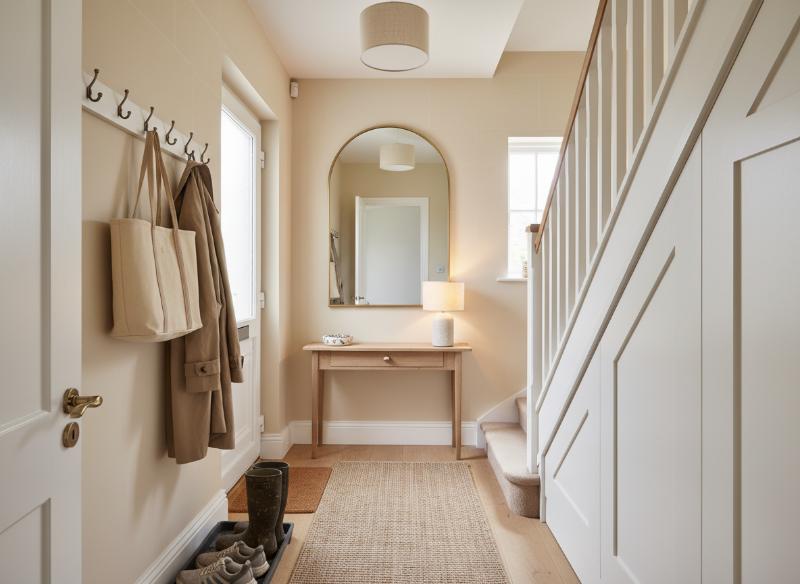
Keep the main sightline clear and give the eye one strong focal point. This could be a generous mirror, a framed print or a pendant light. Practical details matter too. A washable runner, a tray for wet footwear and a small surface for keys help the hall work on an ordinary Tuesday morning, not only when guests arrive.
Bringing Light into Narrow Spaces
Start by maximising the natural light already available. If the front door has glazed panels, avoid covering them with heavy fabric. Privacy film or fluted glass can soften the view from outside while allowing daylight to pass through.
Mirrors can help distribute light throughout the hall. Position one beside or opposite a window to reflect daylight, ideally capturing a bright doorway or attractive feature rather than a crowded coat rack. Pale colours such as warm stone, soft sage and muted cream can also make narrow spaces feel brighter without appearing stark.
Artificial lighting adds warmth and improves visibility. Combine a central ceiling fitting with table lamps or wall lights where space allows. For more inspiration, explore these home lighting ideas to see how the right fixtures and brightness can enhance your interior. Use warm white bulbs of around 2,700K and install dimmers if the hall connects directly to a living area.
Upgrade Your Central Joinery
A staircase often occupies more visual space than any other feature in the hall, so its condition and proportions deserve close attention. Homeowners considering a bespoke replacement or renovation can explore the design, manufacturing and installation services available from Abbott Wade, including projects across England, Scotland and Wales.
Before making changes, view the staircase from the front door and the adjoining rooms. Dark spindles, bulky newel posts or enclosed sides may make the whole entrance feel heavier. A lighter timber finish, slimmer balustrade or updated handrail can give it a cleaner appearance.
The surrounding joinery should feel connected. Match skirting boards and architraves carefully, and repeat one timber tone across the stairs, console and internal doors. Too many competing finishes can make a compact hall look unsettled.
Flooring Choices That Endure
Choose flooring according to the amount of daily wear the hall receives. Porcelain tiles cope well with damp footwear and are easy to clean, while patterned designs can disguise minor marks between washes. Engineered timber brings warmth but needs a suitable entrance mat to catch grit, which can scratch the surface over time.
If you prefer carpet, select a dense, low-pile option designed for high-traffic areas. Deep loops can snag and hold dirt, particularly in homes with pets. A runner is useful on stairs because damaged sections are often easier to replace than a fully fitted floor covering.
Bring home samples and view them during the day and under your evening lights. Colours can shift noticeably between natural and artificial light. Check the samples beside the skirting, stair finish and nearby flooring too, especially where two materials will meet at an open doorway.
Clever Concealed Storage
Prioritise storage for everyday items near the entrance. A shallow 30–40 cm cupboard can hold shoes, while hooks at different heights provide space for coats and bags.
Make use of under-stair areas with fitted drawers or full-height cupboards for shoes, coats and cleaning equipment. Add ventilation for damp clothing.
Keep storage practical with labelled baskets, an internal charging socket and a dedicated space for parcels. A clear walkway and organised entrance make coming home and leaving easier.