Who Is Actually Liable for Neglected Neighbourhood Walkways?
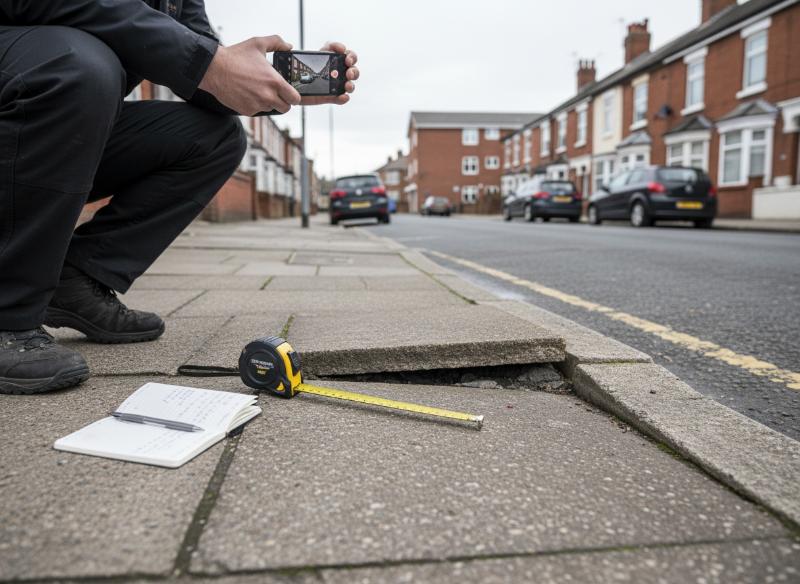
Responsibility for a damaged neighbourhood walkway depends on who controls the land, who must maintain it and whether they knew about the defect. A cracked paving slab outside a home may look like a simple council matter, yet ownership boundaries, inspection records and local rules can all affect liability.
If you’re injured, report the defect promptly and seek appropriate medical care. The points below explain how responsibility is usually assessed, although specific legal duties and time limits vary across the UK.
Where Private Land Meets Public Pavements
A walkway’s location doesn’t always reveal who maintains it. Councils commonly oversee adopted pavements and public footpaths, while housing associations, developers, management companies and private owners may control paths within residential estates or beside commercial buildings. Some routes cross several boundaries within a short distance.
Check the local authority’s online highway records or contact its highways team to establish whether the route is publicly maintained. Land Registry documents, tenancy agreements and estate service-charge papers may also identify the responsible party. The wider debate around sidewalk government shows how maintenance duties can become divided between public bodies and nearby property owners, although overseas arrangements don’t determine liability under UK law.
If the defect sits on adopted land and there is evidence of negligent maintenance, people who have suffered an injury may consider seeking advice about claims against the council. If it lies inside a private courtyard or development, the occupier, freeholder or managing agent may need to answer the complaint instead.
How Local Authorities Define Maintenance Standards
Local authorities generally use risk-based inspection and repair systems. They may classify streets according to footfall, location and likely consequences of a defect. A busy shopping street could receive more frequent inspections than a quiet residential cul-de-sac, while hazards near schools, care facilities or transport hubs may receive higher priority.
A council doesn’t have to keep every paving surface perfectly level at all times. Liability often turns on whether its inspection arrangements were reasonable, whether the hazard met its intervention criteria and how quickly staff responded after learning about it. A loose slab, broken cover or deep hole reported several weeks earlier may raise different questions from damage that appeared only hours before an incident.
Rules also differ internationally and between municipalities, as this explanation of pavement rights and responsibilities illustrates. For a UK incident, request the relevant council’s highway inspection policy, defect categories and expected response times. Published standards can help you compare official policy with what happened at the location.
Navigating Formal Redress for Public Injuries
Start by reporting the dangerous surface through the council’s highways portal and save the reference number. If you were injured, keep medical records, travel receipts and evidence of lost income. A factual report should identify the exact location, describe the defect and state when the incident happened without guessing who was at fault.
The authority may investigate whether it controlled the path, when it last inspected the area and whether anyone had previously reported the problem. It may also argue that a reasonable maintenance system was operating or that the hazard wasn’t serious enough to require immediate action. Evidence from inspection logs and earlier complaints can therefore be significant.
Personal injury cases have strict deadlines. In many cases involving adults in England and Wales, court proceedings must generally begin within three years of the injury, though exceptions and different rules can apply. Complaints procedures and compensation claims are also separate processes. If the injury is serious, responsibility is disputed or the deadline may be close, obtain advice from a suitably qualified legal professional promptly.
Practical Methods for Documenting Street Defects
Photograph the defect as soon as it’s safe to do so. Take a wide image showing the street, nearby buildings and route, followed by closer photographs that capture the damaged surface. Include a ruler or another object of known size beside the defect, but don’t place yourself or anyone else in the path of traffic.
Write down the date, time, weather and lighting conditions. Record where you were walking, what footwear you had on and how the fall occurred while your memory is fresh. If witnesses saw the incident, ask for their names and contact details. Nearby shops, homes or buses may have CCTV, though recordings can be deleted quickly, so requests should be made without delay.
Return visits can show whether the defect remained unrepaired, but never disturb the area or attempt your own repair. Screenshots of earlier online reports, correspondence with the landowner and photographs showing temporary barriers can help establish a timeline. Keep the original digital files because they may contain useful date and location information.
Clear evidence won’t decide liability on its own, but it can prevent uncertainty about the place, dimensions and condition of the walkway. Once the responsible organisation has been identified, send it a precise report and retain every acknowledgement, reference number and response.