Updating Your Capital Residence: Choosing Expert Painters and Decorators London
A fresh colour scheme can make a London home feel brighter, calmer and much better suited to everyday life. Yet a successful decorating project depends on more than picking a shade from a chart. Period details, limited access and the condition of older walls can all affect the work involved. Before booking a professional, it helps to define your plans, understand the preparation required and compare quotations on equal terms. These practical checks will help you find a decorator who can deliver a neat, lasting finish without avoidable disruption.
Start with the property itself
Look closely at the rooms and surfaces before deciding how extensive the update should be. Hairline cracks, peeling paint and water marks may point to issues that need attention before decorating starts. In a Victorian terrace, for example, old plaster might require careful repair, while a newer flat may only need minor filling and sanding.
Original features also deserve consideration. Changes affecting a protected property may require listed building consent, even when the work seems modest. Check the property’s status and any lease conditions early, particularly if you’re planning exterior work, altering decorative details or changing shared areas.
Decide when expert help makes sense
A single, straightforward room may suit a confident DIY decorator. Professional help becomes more valuable when the project covers several spaces, includes damaged surfaces or needs specialist access. High ceilings, detailed cornices and exterior elevations can quickly turn a weekend task into a lengthy undertaking.
When you’re ready to request estimates, ask experienced painters and decorators to inspect the property in person. A site visit allows them to identify repairs, discuss colour choices and estimate labour more accurately. Explain which rooms are included, what finish you expect and whether the home will remain occupied during the work. Clear information reduces the likelihood of unexpected additions once the project has begun.
Compare quotations properly
A useful quotation should separate preparation, materials, labour and any extra services such as moving furniture or removing old wall coverings. Check how many coats are included and which paint range the decorator plans to use. A lower figure can prove poor value if it excludes essential preparation or assumes only one finish coat.
Ask each company to quote for the same scope so you can make a fair comparison. Confirm the proposed start date, estimated duration and payment schedule in writing. You should also ask about insurance and recent work on similar London properties. References or photographs can show how the decorator handles details such as sash windows, skirting boards and sharp lines between contrasting colours.
Give preparation the attention it deserves
Preparation often takes longer than applying the final colour, especially in older homes. Walls may need washing, scraping, filling and sanding before primer goes on. Woodwork can require repairs and a suitable undercoat, while stains may need sealing to stop them reappearing through fresh paint.
Homes with older coatings call for extra care, so discuss appropriate lead paint precautions before anyone sands or strips questionable surfaces. Your decorator should also explain how floors, furniture and fittings will be protected. If you’re staying in the property, agree which rooms will remain usable and where tools and materials can be stored at the end of each day.
Choose colour for real London light
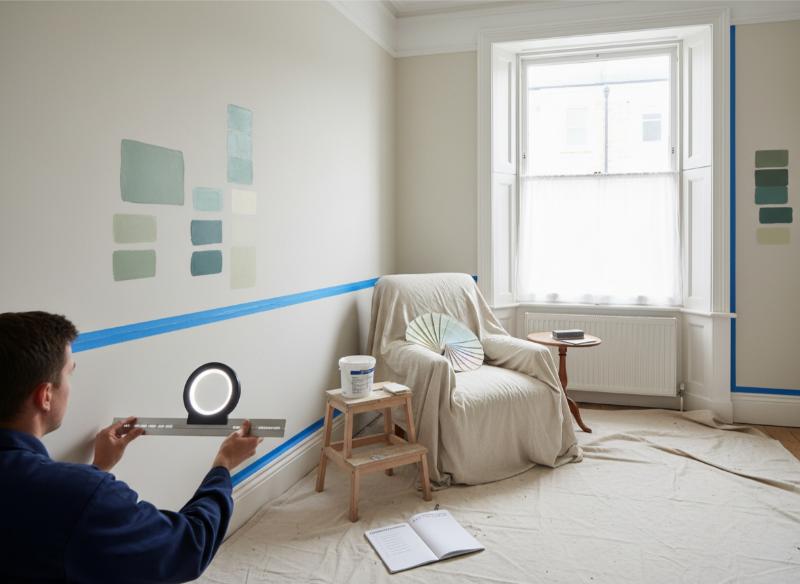
Paint can look very different at home from how it appears under showroom lighting. Test sample patches on more than one wall, then view them in the morning, afternoon and evening. A north-facing room often receives cooler light, while a sunny south-facing space may make warm shades appear stronger.
Consider how colours connect between hallways and adjoining rooms. Repeating one undertone can create a comfortable flow without making every space identical. Finish matters too. Durable, washable paint works well in busy kitchens and entrance halls, while a softer matt surface can flatter living room walls. Keep a record of the brand, colour name and finish once the job is complete, as this makes future touch-ups far easier.
A final walk-through is best done in daylight, once surfaces are dry and protective coverings have been removed. Check edges, corners, woodwork and repaired areas from several angles, then record any small corrections before making the final payment. You’ll be left with a polished interior and the exact details needed to maintain it.