The Future of Farming: How Smart Machinery Drives Efficient Resource Management
The food on your dinner table is getting a high-tech upgrade. Forget the old image of a farmer toiling in the fields; modern agriculture is quietly changing, driven by smart technology. This new way of farming isn’t just about bigger machines. It’s about working smarter, using data and automation to manage resources with incredible precision. This change is vital if we want to feed a growing population and protect our planet for the future.
From the countryside’s rolling hills to the food in our city kitchens, agricultural technology is making a big impact. It’s a fascinating world where data science meets soil science, helping to create a more efficient and sustainable food system for everyone.
Why We Need a Smarter Approach to Farming
Farmers today face a clear challenge: produce more food with fewer resources. The global population keeps growing, but there’s only so much land and water for farming. Traditional farming methods can use a lot of resources, sometimes wasting water, using too much fertiliser, and leaving a big environmental footprint.
That’s where smart farming, or ‘agri-tech’, comes in. By adding technology to every step of the process, farmers can make decisions based on data to get the most out of their operations. This means applying water, nutrients, and treatments only where they’re needed, and in the exact right amounts. This not only boosts crop yields and quality but also drastically cuts down on waste and reduces the environmental impact of food production.
Meet the Robots of the Field
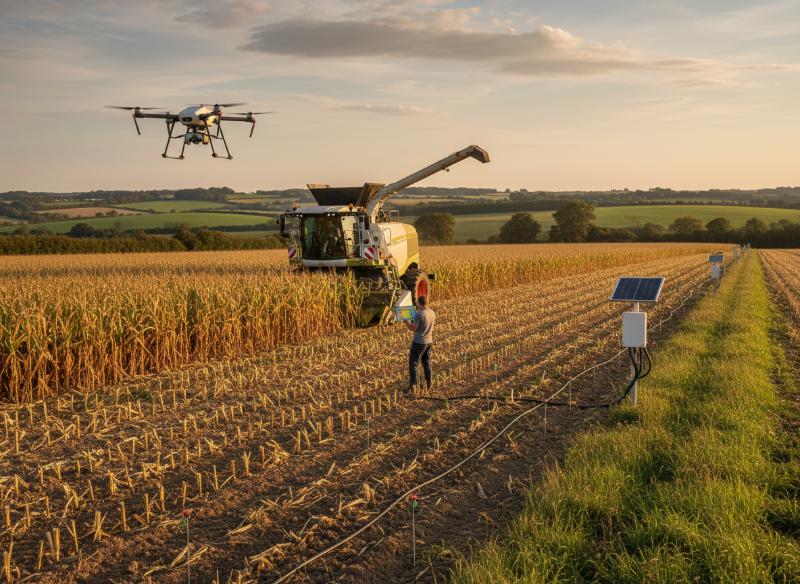
Today’s farms are starting to look more like advanced factories than simple fields. GPS-guided tractors can plough, plant, and spray with accuracy down to the centimetre, working day or night without getting tired. Drones fly overhead, using special cameras to check crop health, spot pests, or monitor irrigation levels. This gives farmers a bird’s-eye view that was once impossible.
This automation also applies to highly specialised equipment. For example, modern forage harvesters do more than just cut crops for animal feed. They’re packed with sensors that can analyse the crop’s moisture content and nutritional value in real-time. This helps farmers decide the best time to harvest and how to store the silage. This level of detail ensures higher quality feed for livestock, which then improves the quality of dairy and meat products.
Data: The New Soil
The real strength of smart machinery comes from the data it gathers. Every time a tractor passes, a drone flies, or a sensor checks the ground, it creates a stream of valuable information. When this data is analysed, it builds a detailed digital map of the farm, showing differences in soil type, nutrient levels, and moisture content from one square metre to the next.
This approach, known as precision agriculture, allows for incredibly targeted actions. A smart spreader can automatically adjust how much fertiliser it puts down as it moves across a field, applying more where the soil is poor and less where it’s already rich. Similarly, an irrigation system can deliver water directly to the roots of thirsty plants, avoiding the waste that comes with broad-area sprinklers. Instead of treating an entire field as one uniform block, this method manages it as a complex mix of individual needs.
The Impact on Your Plate and Planet
This technological shift in the countryside benefits all of us. By using resources more efficiently, smart farming helps save water, reduce chemical runoff into rivers, and lower the carbon footprint of food production. These environmental benefits are vital in our shared effort to build a more sustainable future.
For consumers, this can mean higher quality, more affordable food. Healthier, more resilient crops lead to more reliable harvests and less food loss between the farm and the shop. As the technology keeps developing, it also creates possibilities for greater transparency. One day, you might scan a code on your food packaging and see your meal’s entire journey, from the specific field where it grew to the sustainable practices used to produce it.
Ultimately, the smart machines working in fields across the country are doing more than just managing resources efficiently. They are helping to secure our food supply and protect the environment, making sure the food on our plates is not only delicious but also grown with care for the planet.