Creating Better Boundaries Between Work and Rest
Your home should be a place where you can switch off, recharge and enjoy life, not an extension of your workplace. Yet when work has no clear finishing point, emails follow you to the sofa, unfinished tasks occupy your thoughts, and personal time gradually disappears. For people working from home or following hybrid arrangements, the challenge is not simply finding time to relax but creating a clear separation between professional responsibilities and everyday life. Establishing dedicated workspaces, setting firm working hours and building simple evening habits can help you reclaim your personal time, reduce work-related stress and create a healthier work-life balance.
The Mental Toll of Blurred Boundaries
A blurred working day keeps part of your attention tied to unfinished tasks. Even when you’ve closed the laptop, you may find yourself rehearsing tomorrow’s conversation, checking notifications or feeling guilty for sitting down. Over time, that low-level alertness can affect sleep, concentration and your ability to feel properly rested.
The effect is especially noticeable when you work from home. Without a commute, there’s no natural transition between professional and personal time. One minute you’re editing a report and the next you’re preparing dinner in the same room, with the report still open nearby. Hybrid workers can experience a similar problem because home working days often stretch beyond the hours they would keep in a shared workplace.
Clear workplace boundaries protect time and attention by setting expectations. That could mean telling colleagues that you respond between 9 am and 5.30 pm or agreeing which situations genuinely require contact outside those hours. If your role has unpredictable demands, decide what counts as urgent so that every message doesn’t receive the same priority.
Watch for early signs that work has claimed too much space. Regularly eating at your desk, checking messages in bed and postponing ordinary plans because you might receive an email all point to a weak stopping line. Choose one clear finish time for most days and communicate it. Consistency helps colleagues know when you’re available and teaches your brain when it can release its focus.
Setting Up Dedicated Activity Zones
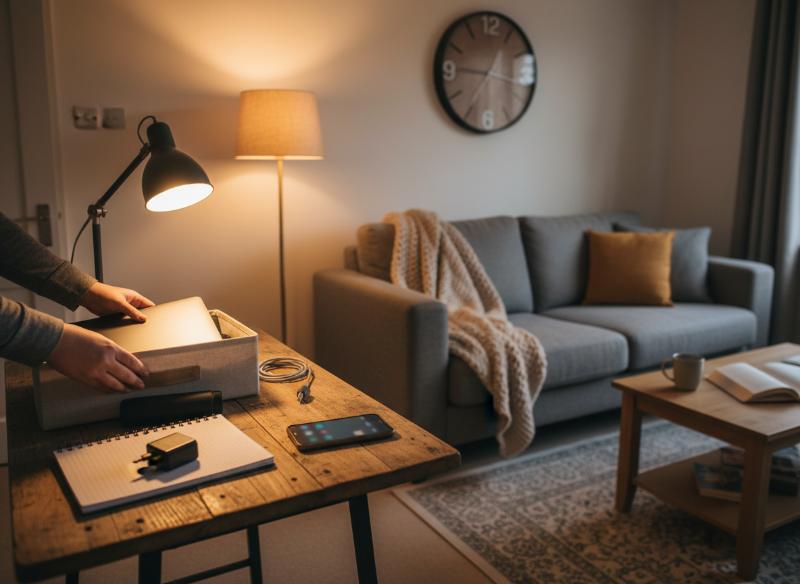
Assign a specific place to work, even if you don’t have a spare room. A small desk in a quiet corner can work well when you keep it free from household paperwork, laundry and hobby supplies. At the end of the day, put your laptop, notebook and charger in a drawer or closed box. Removing those visual reminders reduces the temptation to reopen a task after dinner.
Shared spaces need firmer rules. If you use the dining table, set up shortly before work and clear everything away when you finish. Avoid leaving a monitor or files in place overnight. A five-minute pack-away routine transforms the table back into a domestic space and provides a physical signal that work is over.
Shared spaces need firmer rules. If you use the dining table, set up shortly before work and clear everything away when you finish. Avoid leaving a monitor or files in place overnight. A five-minute pack-away routine transforms the table back into a domestic space and provides a physical signal that work is over. Thoughtful interior design, including creating distinct zones in an open-plan home, can also help separate work areas from spaces intended for relaxation.
You can also create smaller zones for different activities. Keep the sofa for conversation and entertainment, use one chair for reading and avoid taking the laptop into the bedroom. The benefits of professional boundaries become easier to maintain when your surroundings support the behaviour you want.
Think about noise and household movement too. Headphones can help during a short period of focused work, while a folding screen may provide useful separation in a bedroom or living room. In a busy household, agree on visible availability cues. A closed door or desk lamp might mean you shouldn’t be interrupted for 30 minutes, while an open door shows that a quick conversation is fine. Simple cues avoid repeated explanations and help everyone use limited space more comfortably.
Investing in Detached Focus Retreats
A detached garden workspace may suit people who work from home most days and have little separation indoors. Walking a short distance from the house creates a modest version of a commute, giving you time to shift into work mode in the morning and leave it behind later.
Before committing, consider how the space will work throughout the year. Check insulation, natural light, ventilation, power access and internet connectivity. Measure the furniture you intend to use, including the space needed to move a chair comfortably. Storage matters as well because files, equipment and cables can quickly make a compact building feel cluttered.
Budget for the complete set-up, not only the structure. Ground preparation, electricity, heating, blinds, office furniture and data connections may all affect the final cost. If timing and price influence the decision, looking at garden buildings on sale can help you compare sheds, cottages, chalets and custom options against the practical requirements you’ve listed.
A detached room should still have defined opening hours. Leaving the house doesn’t automatically stop overwork if you stay in the garden office until late evening. Set an alarm ten minutes before finishing, save your work and write down the first task for tomorrow. Then switch off the lights and lock the door.
This option won’t suit every home. Renters, people expecting to move soon, and those who work remotely only once a week may get better value from a compact indoor desk. Check any relevant permissions, property restrictions and installation requirements before ordering. A dedicated retreat is most useful when it solves a regular space problem and will receive steady use across several years.
Simple Habits for an Evening Reset
Create a simple ten-minute closing routine by reviewing tomorrow’s schedule, writing down unfinished tasks and closing work-related windows. Turn off notifications after working hours and maintain clear limits by following these therapist-recommended workplace boundary tips.
Establish a physical transition by changing clothes, taking a short walk or doing a relaxing activity. Avoid unnecessary late meetings, recognise your personal limits and suggest alternative schedules when needed. Practising healthy boundaries for wellbeing can help protect your personal time and reduce work-related stress.
Remember that consistency matters more than perfection. Even when unexpected tasks or family responsibilities disrupt your evening, return to your usual routine the following day. End each working session by writing tomorrow’s first task, putting away your equipment and closing your workspace.