How to Create a More Efficient and Creative Home Workshop
A bespoke workshop works best when its infrastructure supports the way you design, build and finish each project. Thoughtful planning can reduce time spent moving materials, prevent avoidable clutter and create a more comfortable place to work. The same principles apply when creating a functional and well-organised workspace, where furniture, lighting and layout should support the activities taking place there. The key is to consider the workshop as one connected system, with its layout, utilities, ventilation and storage all designed around your regular tasks.
Layouts That Encourage Creative Flow
Start by mapping the path a typical project takes through the workshop. Raw materials might move from storage to a cutting area, then on to assembly and finishing. Arranging equipment in that order keeps unnecessary lifting and backtracking to a minimum.
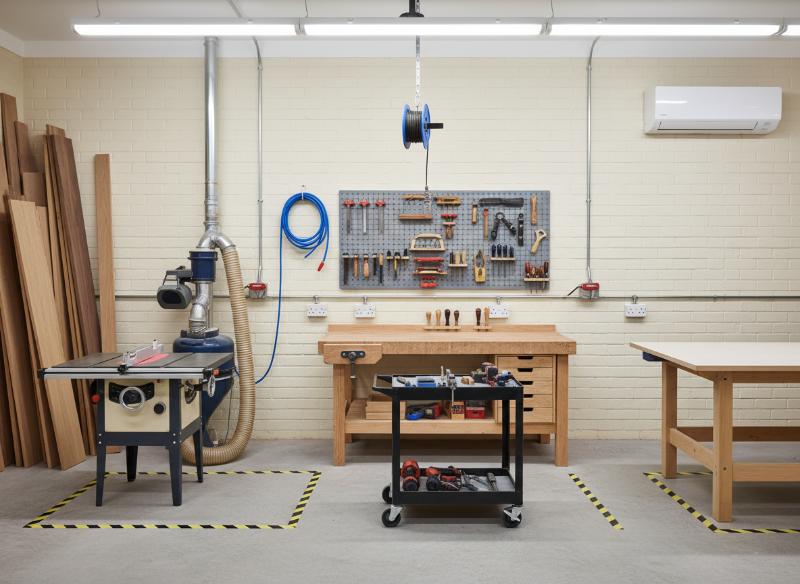
Allow generous clearance around benches and larger machines, including enough room for long boards or sheet materials. Mobile worktables can make a compact workshop more flexible, while marked floor zones help keep access routes clear. Position frequently used hand tools close to the main bench and place messy preparation tasks near extraction points. Before fixing equipment permanently, test the proposed layout with cardboard templates or masking tape on the floor.
Reliable Power and Compressed Air
List the equipment you expect to run at the same time, then ask a qualified electrician to assess circuits, sockets and isolation controls. Plenty of waist-height outlets will reduce trailing cables, while ceiling-mounted reels can serve central benches without creating trip hazards.
Compressed air also needs careful sizing. Compare each tool’s pressure and airflow requirements with expected simultaneous demand. A hydrovane compressor uses rotary vane technology to provide a steady supply of compressed air and may suit workshops with regular demand for pneumatic tools. Its relatively quiet operation can also be useful where equipment is installed close to working areas. Good compressed air system design should account for pipe diameter, moisture management and future expansion. A looped compressed air piping layout can also help maintain steadier pressure across several workstations.
Dust Extraction and Air Quality
Connect dust-producing machines to a properly sized extraction system instead of relying on occasional sweeping. Short, direct duct runs generally improve airflow, while blast gates let you concentrate suction at the machine currently in use. Keep flexible hose sections as brief as the layout allows because their ridged interiors create resistance.
Fine airborne particles need separate attention. Fit suitable filtration, arrange make-up air where required and avoid directing cleaned air straight onto finishing surfaces. Filters and collection containers should remain easy to reach, as hidden maintenance points are often neglected. Check hoses for splits and clear settled material from ducts on a regular schedule. Personal protective equipment should complement these controls, especially during sanding, cutting and filter changes.
Storage Solutions for Heavy Tools
Store heavy tools between knee and shoulder height where possible, with the greatest weight on lower shelves. Cabinets and racking should have clear load ratings, secure fixings and level bases. If tools regularly move between stations, use purpose-built wheeled bases with locking castors and handles that keep your hands away from pinch points.
Group equipment by task, then give every item a labelled position. Shallow drawers work well for measuring tools and accessories, while pull-out trays make dense machinery easier to access without reaching into deep cupboards. Leave enough clearance to lift safely and use a trolley for awkward items. A well-planned parking space for each mobile unit will keep working routes open and stop valuable bench space from becoming permanent storage.
The best workshop plans leave a little room for change. Spare electrical capacity, an accessible air line connection and one unallocated storage bay can accommodate the next machine without forcing a complete redesign.