What to Check Before You Buy a New Mattress
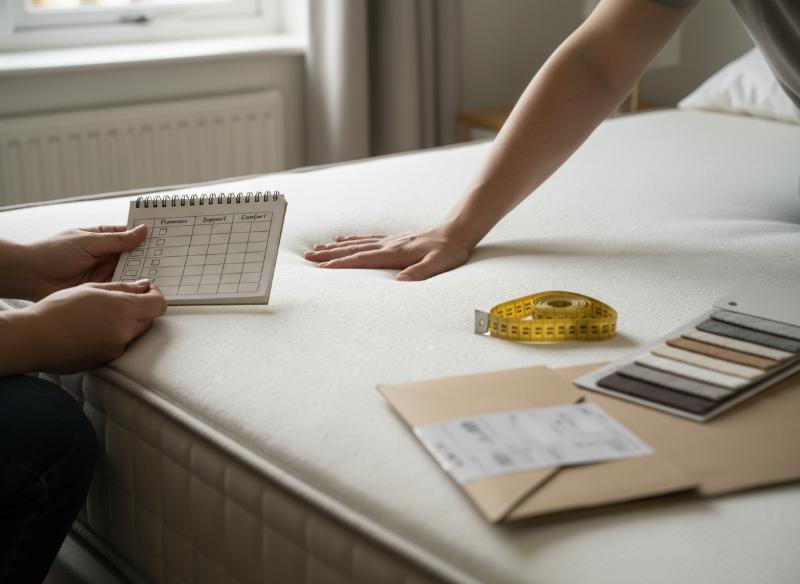
A new mattress is one of those purchases that many people put off, and considering the average length of time to change a mattress is every 7 years, it goes without saying it’s a huge undertaking, and it’s not a decision you should be rushing at all. Because getting it wrong means living with the consequences for years, since it is not exactly a cheap purchase most people can afford to replace if they get it wrong.
Here are a few practical checks to make before you commit to a new mattress.
Firmness and Support Level
Firmness is one of the most subjective parts of choosing a mattress, and what feels supportive to one person can feel rock hard to someone else. A mattress that’s too soft can leave your spine out of alignment overnight while one that’s too firm can create pressure points at the hips and shoulders.
Most manufacturers rate mattress firmness on a scale, but these ratings aren’t standardized across brands, so a medium from one company can feel closer to a firm from another company. This makes testing it in person more important so you can get a feel for how it fits your body.
Sleeping Position and Body Weight
The right mattress depends heavily on how you sleep and how much you weigh, not just personal preference for soft or firm. Side sleepers generally need more cushioning at the shoulders and hips while back and stomach sleepers usually do better with firmer support that keeps the spine level.
Body weight changes this further since heavier sleepers tend to compress softer mattresses more quickly and may need a firmer or higher density option to get the same level of support a lighter person would get from a softer one.
Trial Periods and Comfort Guarantees
A mattress can feel fine for ten minutes in a showroom but completely different once you’ve been sleeping on it for a couple of weeks. This is why a proper trial period matters. Look for retailers who offer a genuine exchange window rather than a same-day final sale. Your body needs time to adjust to a new surface.
Some mattress retailers offer a set number of nights to exchange a mattress if it doesn’t suit you, and sometimes this can be in conjunction with an in-store trial before you buy. Check the exact terms too, including how many nights you get and whether delivery or collection is included or if costs are deducted from a refund.
Mattress Type and Materials
Pocket sprung, memory foam, hybrid, and gel-infused mattresses all behave differently, and the material affects everything from temperature regulation to motion transfer if you share a bed. Memory foam tends to retain more heat while pocket springs and hybrids generally allow more airflow through the layers.
If you share a bed with a partner who moves around a lot at night, a mattress with strong motion isolation, usually pocket sprung or hybrid designs, will reduce how much you can feel the movement. Checking the materials list rather than relying on marketing terms like “luxury” or “premium” gives a clearer picture of what you’re actually buying.